
Ecommerce has come a long way in 2026, but the rise in returns isn’t just a passing trend; it’s the new normal. According to recent industry data, returns now account for over $685 billion in lost revenue every year. That figure is climbing, not slowing down. Nearly 30% of all online orders are sent back, and shoppers expect a seamless, frustration-free experience when they do.
“The post-purchase experience deserves a seat at the executive table because it affects both brand equity and margin. A better return process can reduce service volume while increasing customer confidence. Clearer shipping communication can lower inbound tickets while improving trust. Faster resolution can protect repeat purchases. Cleaner workflows can reduce stress on teams and make the business easier to scale.” Read Article on Forbes


It’s not just about getting a product out the door anymore. What happens after the purchase is just as important. A slow, outdated, or manual return process won’t cut it for enterprise retailers. Instead, brands are realizing that the post-purchase experience is a core part of customer satisfaction and loyalty.
Returns have become a part of customer retention strategies. A complicated or slow refund process can mean lost lifetime value. On the other hand, fast and easy returns can boost customer confidence and drive repeat purchases. In 2026, this has become a defining point in ecommerce strategy.
In light of the latest returns statistics, it’s clear that effective returns management drives more sales. It’s also clear that brands need better systems, faster workflows, and smarter automation. Read on to learn more.
What Enterprise Returns Management Software Actually Does
Enterprise returns management software is designed to handle the scale and complexity that large retailers deal with every day. It’s not just about printing return labels. It’s about building an automated infrastructure that supports the entire lifecycle of a return, from the customer’s first request to the final refund or restock.
Software like ReadyReturns connects all parts of the return process. It offers branded return portals that match the look and feel of your website, customizable return reasons and rules, automatic RMA creation, and smart routing to warehouses or return hubs. With integrations into major ecommerce platforms and ERP systems like NetSuite and Magento 2, enterprise returns software fits right into your existing tech stack.
Systems like ReadyReturns enable retailers to automate and personalize the return experience while keeping internal teams aligned and efficient. Instead of relying on spreadsheets, customer emails, and warehouse guesswork, your team gets full visibility across channels and locations.
This tech isn’t optional anymore; it’s the standard for enterprise operations in 2026.
Why Enterprise Returns Software Is Essential in 2026
Retail is being shaped by instant gratification and convenience. Returns are no exception. In fact, returns have become a critical part of the purchase decision. Shoppers often check the return policy before they buy. If it’s too rigid or unclear, they walk away.
With consumers expecting free return shipping, quick refunds, and the ability to return items from multiple channels, legacy processes just don’t work anymore. Here’s where enterprise returns software makes the difference.
Retailers now face pressure to support omnichannel returns, think online orders returned in-store, in-store orders returned online, or marketplace orders returned directly to the brand. There’s also pressure from platforms like Amazon and Walmart, which enforce strict service-level agreements (SLAs) around refunds and return processing.
Data shows a clear pattern: retailers that invest in return tech are outperforming competitors in customer satisfaction and repeat sales.
Returns are more than a cost center. They’re a strategic advantage when handled properly.
“The post-purchase experience shapes your brand just as much as what draws a customer to it before they buy. Branding or advertising begin to shape customer confidence, but the experience that follows checkout influences loyalty more.” Read Article on Fast Company

Big Benefits of Using Enterprise Returns Management Software
There’s a reason more retailers are switching to automated returns software. The benefits are too big to ignore.
| Key Benefit | How Enterprise Returns Software Improves Operations |
|---|---|
| Fewer Errors | Automated workflows remove manual steps, reducing the likelihood of mistakes during return processing. |
| Faster Refunds | Branded return portals and automated status updates accelerate the return-to-refund timeline. |
| Better Inventory Management | Real-time return data allows items to be restocked, repaired, or flagged for inspection quickly. |
| Smart Return Routing | Automatically sends returned items to the correct warehouse, store, or processing hub. |
| Improved Customer Experience | Customers receive seamless tracking, faster responses, and branded communication throughout the return journey. |
| Fraud Prevention | Rule-based logic identifies suspicious behavior and helps prevent return abuse before it becomes costly. |
These aren’t theoretical improvements; they’re proven. Returns software is already revolutionizing ecommerce fashion, where speed and convenience matter more than ever.
Must-Have Features in Retail Returns Software
There are many returns platforms on the market, but not all of them offer the features that modern retailers need. If you are evaluating solutions, keep an eye out for these must-have tools:
- Custom-branded portal: Keeps your return process on-brand and creates a seamless experience for customers.
- Return tracking and notifications: Reduce support volume by keeping customers informed.
- Multi-channel support: Handles returns from ecommerce, marketplace, and in-store purchases in one system.
- Automated RMA creation: Approves or flags return requests based on set rules
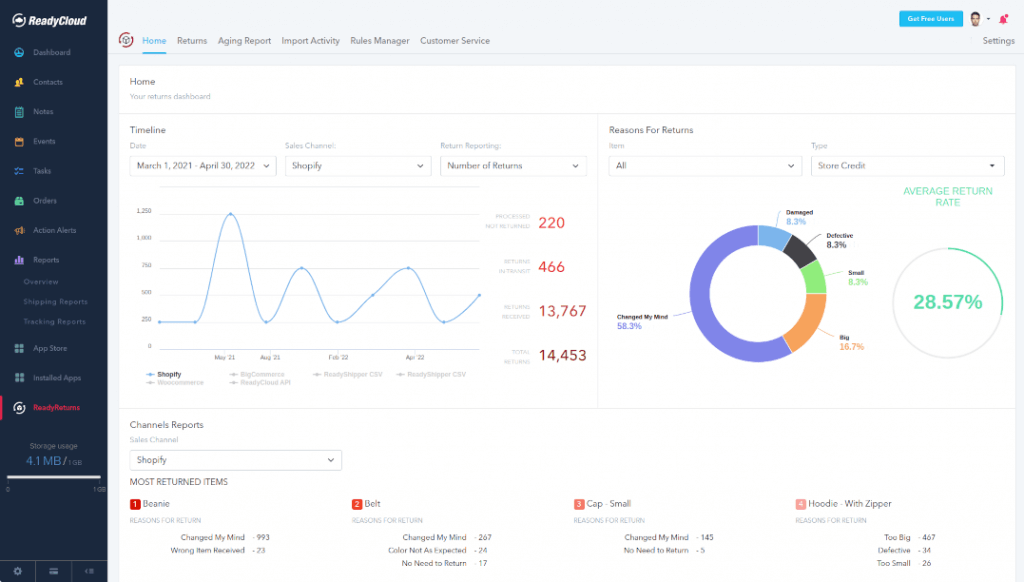
- Return reason tracking: Helps you understand why products are being returned and how to fix the problem
- Data and reporting: Gives you insight into performance, fraud risks, and customer behavior.
Solutions like ReadyReturns are designed to support these capabilities while integrating directly into your existing stack.
Why SMB Return Tools Don’t Work for Enterprise Retailers
Most entry-level returns tools are built for small to mid-sized businesses. They offer basic label generation and a simple returns portal. But that’s not enough when you’re running an enterprise operation.
Enterprise brands have multiple warehouses, different return rules for each region or product category, B2B and D2C channels, and strict compliance requirements. A one-size-fits-all plugin won’t get the job done.
Scalability is key. A brand doing thousands of orders a day can’t afford delays or bottlenecks. And it can’t risk sending a refund before an item is verified. That’s where full enterprise returns management software stands apart; it offers the flexibility and control large brands need.
Enterprise systems like ReadyReturns can also integrate with your ERP, WMS, CRM, and marketplaces. That’s a big difference from basic apps.
What Features Matter Most in Enterprise Returns Software
If you’re evaluating platforms, make sure the solution includes the right set of features for large-scale operations. Look for:
| Shipping Component | How It Works in Shopify | Why It Matters for Your Shipping Strategy |
|---|---|---|
| Shipping Zones | Groups countries or regions together so they share the same shipping rates, such as domestic versus international. | Lets you control costs and delivery expectations based on where customers are located. |
| Shipping Profiles | Allows you to group products and apply different shipping rules to each group. | Makes it possible to handle special cases, like perishable items needing expedited delivery. |
| Custom Rate Rules | Supports conditional pricing, including free shipping thresholds and weight-based tiers. | Helps protect margins while giving customers clear and predictable pricing. |
| Free Shipping Thresholds | Enables free shipping when orders exceed a specific dollar amount. | Encourages higher average order values without fully absorbing shipping costs. |
| Tiered Weight or Price Rates | Adjusts shipping costs dynamically based on order weight or value ranges. | Prevents undercharging on heavier shipments and avoids overcharging on smaller orders. |
| Ongoing Zone Management | Shipping zones can be reviewed and updated as you add new countries or regions. | Essential for international expansion and maintaining accurate global shipping costs. |
You can see some of these features in action in this Magento returns guide and how to manage Magento 2 returns.
Connecting Your Tech Stack to Returns Software
Enterprise retailers often use complex systems to manage their operations. That means any new tool must integrate smoothly with the existing stack.
Look for software that supports native or API-based integrations with platforms like Magento 2, NetSuite, BigCommerce, and Shopify. With platforms like ReadyCloud, you can connect your returns to CRM, order history, shipping workflows, and analytics dashboards.
This kind of integration lets you see customer behavior at every touchpoint, from first order to final return. It also means returns data can inform product decisions, marketing strategies, and even improvements to customer support.
A connected stack isn’t just more efficient, it’s more profitable.
“A great e-commerce experience requires more than competitive prices, a robust selection of goods, fast shipping and easy returns … it takes them all. Today’s consumer mindset has changed. Services like Amazon Prime have set the bar at a higher level, with speedy delivery, low prices, a vast selection and hassle-free returns.”

Building a Smarter Returns Strategy for 2026 and Beyond
There’s no question that returns will keep increasing. Smart brands are preparing now.
The right returns strategy blends technology, policy, and experience. Prepaid labels, fast refunds, and self-service portals are becoming the standard. In-store returns for online purchases are growing, especially for omnichannel brands.
At the same time, sustainability is under the microscope. Customers want greener options, but retailers can’t afford to raise costs. Smart software helps route returns more efficiently, reduce unnecessary shipments, and track product lifecycle data.
It all adds up to a system that’s smarter, leaner, and built to scale. Want to see what the future looks like? Here’s a closer look at current marketplace return strategies and how to build a smart return policy that delivers.
Final Thoughts + What to Do Next
Returns are no longer a side issue; they’re front and center in your ecommerce strategy. Enterprise brands need to stop thinking of returns as a cost and start seeing them as an opportunity.
When done right, returns management can improve customer retention, reduce operational friction, and support sustainable growth. But it takes the right technology to make that happen.
ReadyCloud’s ReadyReturns solution offers enterprise-grade returns software that connects your ecommerce stack, automates workflows, and improves the customer experience from the very first click to the final return.
See how ReadyReturns can help you scale smarter. Schedule your free demo today
Choosing the Right Returns Software for Your Store
When selecting a returns platform, consider your current systems, order volume, product types, and return policy goals. Some questions to ask include:
- Does it integrate with my ecommerce and shipping software?
- Can I customize the portal to match my brand and tone?
- Will it grow with my business as I expand into more sales channels?
- Does it offer robust analytics to help me reduce returns and improve operations?
- What does support look like if I need help during setup or scaling?
The ReadyCloud suite, including ReadyReturns, offers a fully integrated ecosystem for managing shipping, returns, customer profiles, and post-purchase marketing all in one place.
Making Returns Work for You
Returns are no longer a back-office task. They are a strategic part of your business that affects revenue, retention, and reputation. With the right retail returns software, you can take control of this process, cut operational waste, and create a better customer experience from start to finish.
This is not just about logistics. It is about growing smarter, faster, and more customer-friendly every step of the way.
Find Out How You Can Make Returns Hassle-Free
Want to make your returns process more profitable? Let ReadyReturns show you how to make smarter, faster, data-driven return decisions. See how easy it is to add branded returns portals to your site and reduce your return rate from the inside out. Schedule your demo today.
Frequently Asked Questions About Enterprise Returns Software
What is enterprise returns software?
It’s a system designed for large-scale retailers to manage and automate product returns across multiple channels, warehouses, and platforms.
Why do enterprise retailers need this software?
Because manual processes can’t handle the volume, complexity, or speed that customers expect. This software turns returns into an efficient, trackable operation.
Can this software integrate with NetSuite or Magento?
Yes. Most enterprise solutions offer native integrations or open APIs for ERPs, ecommerce platforms, and shipping systems.
Does it help prevent return fraud?
Absolutely. You can set rules to flag suspicious return patterns, enforce time limits, and verify items before issuing refunds.
How does it improve customer experience?
Customers get branded portals, automated updates, and faster refunds, which improves satisfaction and encourage repeat purchases.
Can this work with multiple sales channels?
Yes. It’s built to handle returns from marketplaces, your online store, and even in-store purchases.
Is it easy for warehouse teams to use?
Enterprise software typically includes dashboard views, smart routing, and scanning tools to streamline warehouse workflows.
Will this save money?
Yes. Reduced manual labor, better fraud control, and faster processing all contribute to cost savings.
How much does enterprise returns software cost?
Costs vary depending on features, volume, and integrations, but ROI comes from efficiency gains and improved customer retention.
Get Started With ReadyReturns
ReadyReturns powers some of today’s leading retailers with its customer-centric approach.
Learn more about ReadyReturns. Reach out with any questions by Contacting Our Sales Team.